
Key Takeaways:
-
Expert Tips: How to Move an Upright Piano
Professional movers ensure a smooth piano transit by:
- Measuring access points and planning routes to prevent unexpected moving issues.
- Using tools like dollies and padded blankets to ensure safe handling and protect your home.
- Securing the piano internally to prevent internal damage during transit.
Introduction
Piano moving is no ordinary task, especially when it comes to upright pianos. These majestic instruments may appear sturdy, but their internal components are delicate. An upright piano houses thousands of finely tuned parts—all working in harmony to produce rich, resonant sound. However, with narrow HDB corridors, tight lift spaces, and unpredictable weather, an upright piano transit can become challenging.
In this article, we share expert advice from professional piano relocation specialists on how to move an upright piano. Let’s explore what goes into a successful, damage-free move.
Why Piano Moving Requires Expertise
Moving a piano is not the same as shifting a sofa or refrigerator. Upright pianos can weigh between 91kg and 545kg and are intricately constructed with over 10,000 moving parts. Inexperienced handling can warp the frame, damage the keys, or throw off the internal alignment. That’s why engaging a professional piano moving service in Singapore is essential in order to avoid expensive repairs or complete replacement.
How to Move an Upright Piano Safely: Tips from the Experts
If you’re planning to move your upright piano, whether it’s within your HDB flat or across town, here are five key steps professional movers take to ensure a smooth experience:
1. Pre-Move Assessment
A seamless piano moving process begins with an on-site assessment. Experienced movers take the time to inspect every detail of the environment before lifting a finger. This includes measuring door widths, checking staircase angles, evaluating lift access, and identifying potential obstacles. These factors may seem insignificant, but they can drastically affect whether a piano can be safely moved out of a space.
This step becomes especially critical in older HDB buildings without direct lift access. In such cases, movers must carefully plan how to properly carry a heavy upright piano down several flights of stairs. Every twist and turn must be accounted for in advance to avoid unnecessary risks.
2. Use the Right Piano Moving Equipment
Professional movers come equipped with heavy-duty piano moving equipment like padded blankets, lifting straps, and ramps. Each piece plays a part in easing instrument transport. For instance, padded blankets prevent scuffs and dents, while skid boards help manoeuvre the piano around tight corners with minimal lifting.
These tools not only protect the instrument itself but also prevent damage to your home’s floors, walls, and door frames. With the right equipment, professionals maintain better control and stability throughout the relocation process, reducing the risk of accidents or costly repairs.
3. Secure Internal Components
Before the move begins, professional movers take meticulous steps to secure the piano’s structure. The first thing is to lock the keyboard lid to prevent it from swinging open and damaging the keys. All other movable parts, including the pedals, fallboard, and music stand, are either removed or tightly secured. Once the components are stabilised, the entire piano is wrapped in thick, multi-layered padding and secured with straps to cushion any bumps or vibrations during transit.
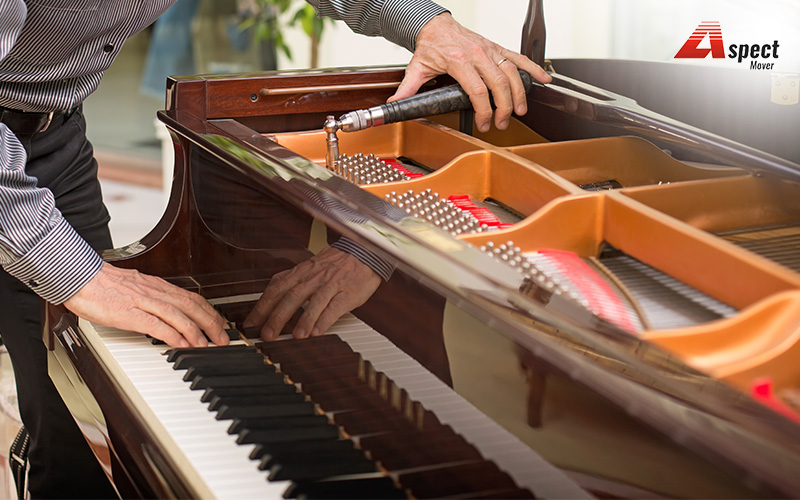
This careful preparation is essential to prevent internal shifting that could misalign the delicate mechanics inside. It also protects the piano’s exterior from scratches, dings, and accidental impacts.
4. Prepare for Staircases or No Lift Access
If you’re living in a walk-up unit, moving an upright piano becomes a logistical challenge. Professional piano movers are trained in stair-handling techniques that prioritise safety, using harnesses, skid boards, and multi-person lift systems. They also know how to carefully guide the piano up or down each flight without causing damage to the instrument or the building.
5. Timing and Insurance
Always schedule your move to avoid rain (which is common in Singapore) and peak-hour traffic. Moisture can damage the wood, warp internal components, and make handling equipment slippery and hazardous. Likewise, scheduling your move during peak-hour traffic can lead to unnecessary delays, prolonged exposure to the elements, and increased stress for everyone involved.
Additionally, it’s essential to confirm whether your movers offer insurance coverage for accidental damage or unforeseen incidents. Knowing that your piano is protected gives you peace of mind, ensuring that you won’t be left facing costly repairs in the rare event of an issue.
Why Engage Professional Movers
You might be tempted to gather a few friends and try to move the piano yourself. But without the right experience and piano moving equipment, you risk more than just a scratched wall or sore back. You could damage your beloved instrument or even injure someone.
Instead, place your trust in the hands of professional movers in Singapore who know how to move an upright piano safely. With the technical know-how, safety protocols, and route planning strategies, these experts can move your piano from point A to B without harm or hassle.
At Aspect Mover, our team is trained in safe instrument transport, equipped with industry-grade tools, and experienced in navigating Singapore’s tricky HDB layouts. If you’re searching for reliable movers in Singapore who know how to move an upright piano, look no further—let us ensure it arrives in perfect condition.
Contact us to schedule an appointment.
Recent Comments