

A piano, a framed painting, and a power rack have nothing in common except one thing: none of them survive a standard “load and go” move. Regular furniture bends a little and forgives a scratch. A piano’s tuning stability, a canvas’s paint layer, and a squat rack’s structural bolts do not. Each fails in a different way, for a different reason, and each needs a different fix. This guide covers what actually happens to a piano, a piece of art, or a home gym in transit, and what protects each one in Singapore’s climate and housing stock. No generic “we handle everything with care” filler. Real technique, real numbers. 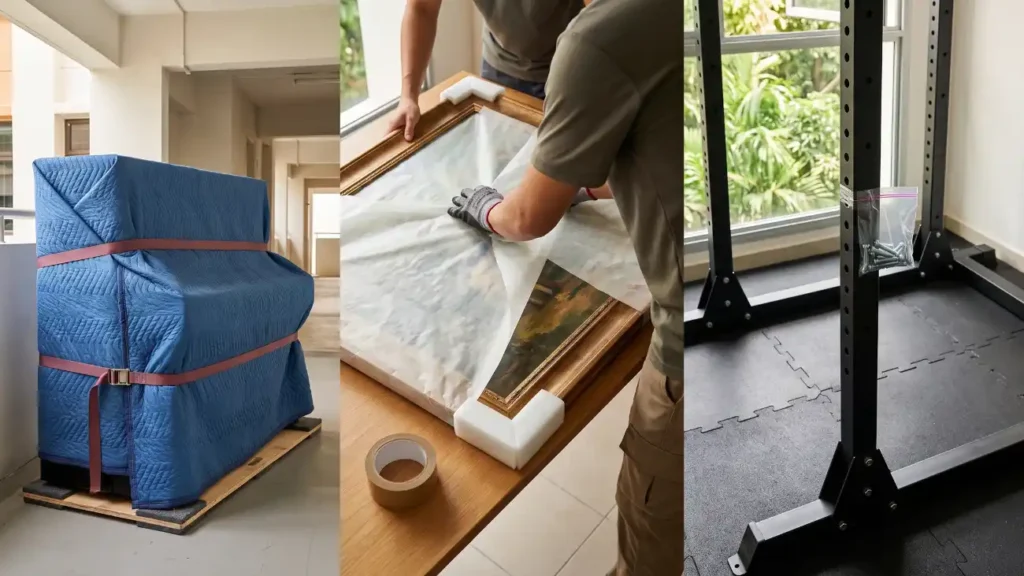
What Makes a Move “Specialty,” Not Just “Fragile”
Quick Answer: A specialty move is one where the item’s function, not just its surface, can be damaged by ordinary handling. A piano goes out of tune from a jolt or a humidity swing. A painting cracks from a temperature change. Gym equipment loses calibration or drops a bolt mid-transit. Each needs item-specific equipment and a slower, sequenced process, not extra bubble wrap.
Most movers can wrap a sofa in fifteen minutes. A piano, a crated painting, or a disassembled power rack takes a plan first. The three categories in this guide fail differently. A piano is a mechanical instrument built around wood, felt, and roughly 230 strings under tension, so shock and humidity throw it out of tune or warp the soundboard. Fine art and antiques are surface-sensitive. A temperature swing during the ten minutes it takes to load a lorry can crack varnish that took decades to form. Gym equipment is a mechanical assembly problem. A power rack is not fragile, but it is only as strong as its weakest bolt once it is back together, and a lost pin means a rebuild trip to the hardware store. In our own quoting process, these three categories account for the jobs most likely to come with a follow-up call after the move, usually because the customer assumed “movers” meant one standard of care across the board. It never does.
How to Move a Piano Without Losing the Tuning
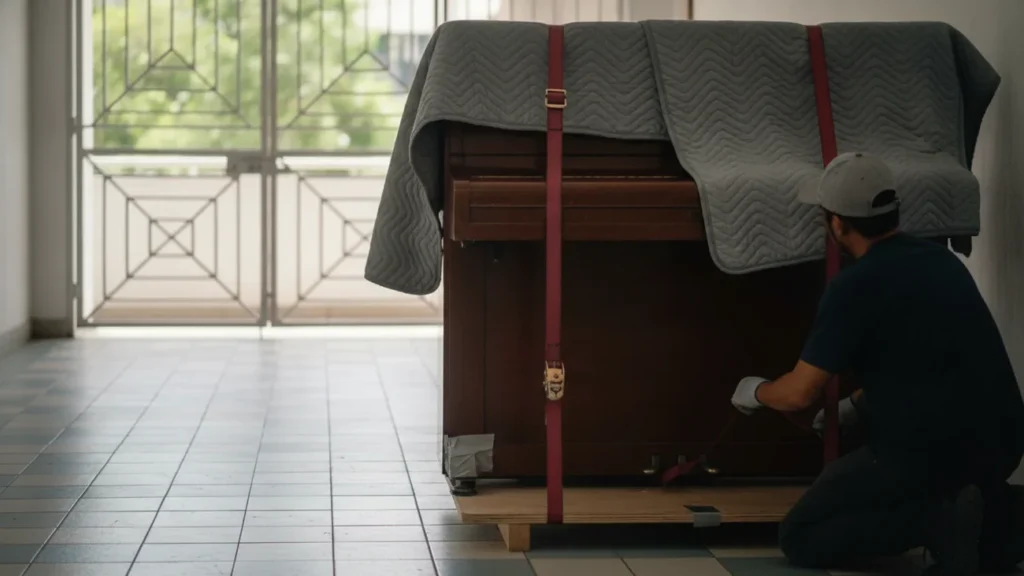
Quick Answer: A piano moves on its side on a padded skid board, never carried loose. Uprights weigh roughly 140 to 230 kg and ride on a reinforced four-wheel dolly with rotational casters. Grand pianos have their legs and pedal lyre removed first, then travel on the board. In Singapore’s climate, wait two to four weeks after the move before retuning, then plan on retuning every six months rather than the yearly interval common in drier countries.
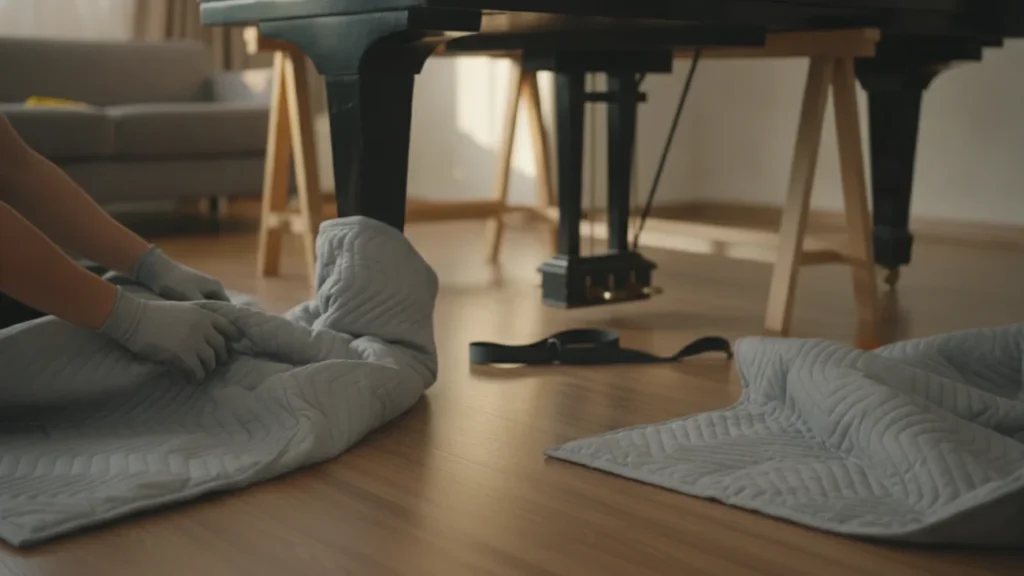
An upright piano weighs 300 to 500 pounds, roughly 140 to 230 kg. A grand can run past 500 pounds and some concert grands clear 1,200 pounds, over 540 kg, concentrated on three legs. That weight does not distribute evenly, which is why a standard furniture dolly is the wrong tool. It flexes under a load it was never rated for. The actual process: for an upright, the piano goes onto a low-profile piano dolly with rotational casters rated for 800 pounds or more, then gets secured with two ratchet straps, not the cam-buckle straps used on regular furniture, because cam buckles loosen under the vibration of stairs and thresholds. For a grand, the legs and the pedal lyre come off first using the maker’s original hardware, the case tips onto a padded skid board roughly six feet long, and the whole assembly rolls out on a second dolly built to slide under the board. Stairs are where most damage happens, not the truck ride. A crew moves on a count, weight controlled from the uphill side the entire way, because a piano that starts to tip on a landing cannot be caught by one person. Singapore adds a climate problem most piano-moving guides never mention. Ambient relative humidity here runs 70 to 90%, against a soundboard’s comfort zone of roughly 40 to 55% RH and 20 to 25°C. Every big swing changes the crown of the soundboard and shifts string tension, which is why pianos in Singapore drift out of tune faster than the same instrument would in a temperate climate. Many local piano technicians treat a Dampp-Chaser humidity control system, typically fitted for SGD 300 to 500, as close to mandatory here rather than optional. Do not book a tuning for moving day. The wood needs time to settle into the new room’s humidity first. Two to four weeks is the realistic window before the first post-move tuning, and after that, six-monthly tuning holds up better than the annual schedule common overseas. Our piano movers team handles upright, grand, baby grand, digital, console, and studio pianos, with disassembly and reassembly included on grands.
Moving Fine Art and Antiques Without Cracking, Warping, or Mould
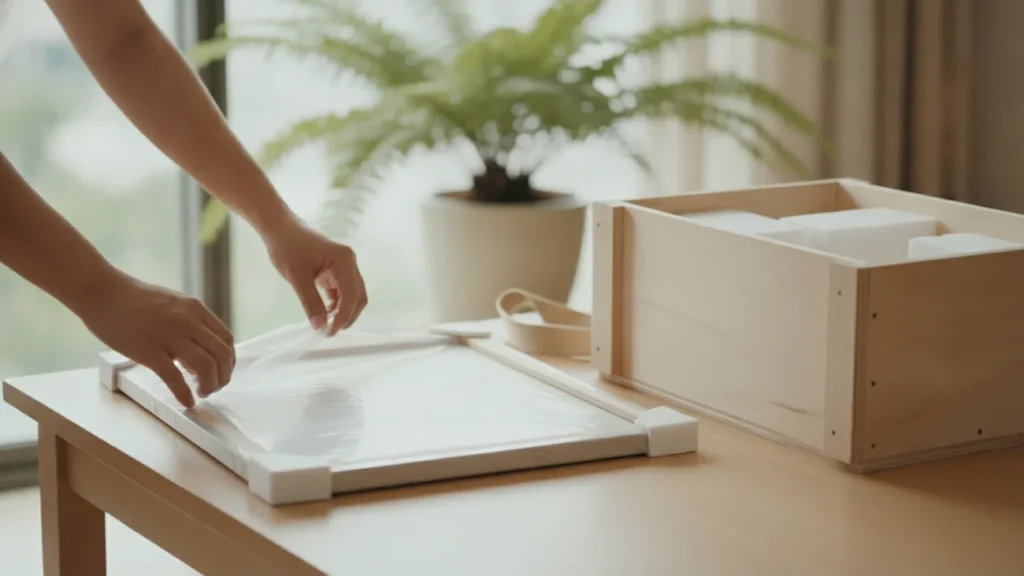
Quick Answer: Paintings, mirrors, and antique furniture need padding at every corner, glassine or acid-free tissue against any painted or lacquered surface, and a fast transition between rooms so the piece never sits exposed to Singapore’s outdoor humidity for long. A soft travel frame is enough for a short move; a sealed custom crate is worth building for anything irreplaceable or headed for storage.
Wood, canvas, and old varnish all move with temperature and humidity, and Singapore’s swing from a 20 to 24°C air-conditioned interior to 90% RH outdoor air in the time it takes to load a lorry is exactly the kind of shock that causes damage. On a canvas, that shock shows up as cracking or tenting in the paint layer and rippling where the canvas has gone slack or too tight on its stretcher bars. On an antique cabinet or table, the same swing swells the wood, which is why drawers and doors on old furniture often jam for the first time right after a move. Veneer can bubble where the glue layer lifts. Above roughly 70% RH sustained, mould starts to colonise wood, fabric, and paper, and Singapore sits above that threshold most mornings. The professional standard, the one museums and fine art carriers build to, is a sealed wooden crate meeting ASTM D6179 construction specifications, with the object floated inside on foam blocking so it never contacts the crate walls directly. That is not necessary for every move. A travel frame, essentially a padded wooden collar around a painting’s edges with the back left open, is enough for a short trip between two air-conditioned homes. A full custom crate earns its cost for anything irreplaceable, for anything going into storage for more than a few weeks, or for a piece crossing a loading dock and sitting in open air. What we tell clients moving valuable pieces: wrap directly against the surface with glassine or acid-free tissue, never plastic film, because plastic traps moisture against paint or lacquer rather than letting it breathe. Pad every corner separately since corners take the impact in a bump, not the flat face. And move the piece last onto the lorry and first off, so the total time outside a controlled room stays short. The ASHRAE Museums, Galleries, Archives, and Libraries chapter, the reference most conservators and fine art movers work from, sets long-term collection storage around 45 to 55% RH and stable temperature, with short-term swings kept as small as possible during handling. That is the target worth aiming for even in a home move, not just an institutional loan. If a piece is going into interim storage between homes, ask specifically whether the storage space is air-conditioned rather than a bare warehouse bay. Our warehouse storage service covers short and long-term holding with access-controlled, fire-compliant facilities for exactly this gap between move-out and move-in dates.
Disassembling and Moving Home Gym Equipment
Quick Answer: A power rack comes apart top-down, crossmembers before uprights, with every bolt bagged and labelled by section before the frame separates. A treadmill gets unplugged, its console detached, and its deck folded and locked, then it travels upright, never on its side, because lying it flat stresses the belt and motor mounts. Weight plates go in boxes, never loose on a lorry floor.
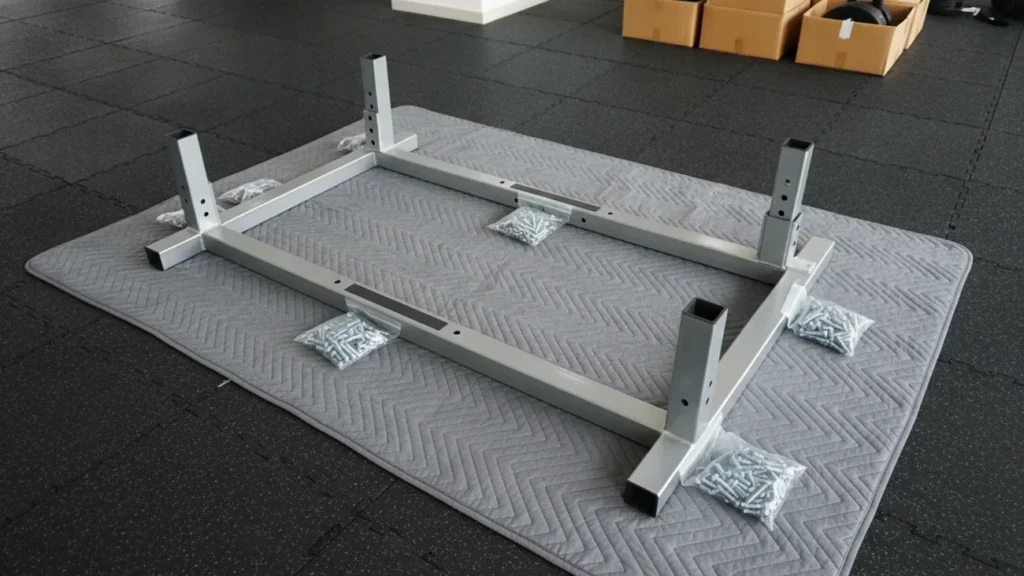
Home gyms have grown fast in Singapore’s HDB and BTO flats over the last few years, and a full setup, rack, bench, plates, and a treadmill, can weigh several hundred kilograms once it is all added up. That matters structurally. HDB’s standard floor loading guidance is around 150 kg per square metre, which includes existing furniture. A power rack with a loaded plate tree pushed into a corner can approach that limit fast if the weight is concentrated rather than spread across the room. It is worth thinking about during the move itself, not just where the equipment ends up. Disassembly is where most damage and lost hardware happens. The order matters: pull-up attachments, safety arms, j-hooks, and band pegs come off first, then crossmembers, and the uprights come apart last, since they are the structural spine of the rack. Every bolt goes into its own labelled bag, taped directly to the frame section it came from, because power rack hardware is often proprietary sized and not something you can replace at a hardware store on a Sunday. Skipping the labelling step is the single most common reason a rack takes an extra hour to rebuild on the other end. Treadmills fail differently. Unplug it, remove the safety key, and detach the console before anything else, since the display cracks easily if it takes a knock during loading. Fold the deck if the model allows it and confirm the lock is fully engaged with a firm push test, because a deck that releases mid-carry swings down hard. The one rule worth remembering: a treadmill travels upright in the lorry, strapped to the wall, never laid flat on its side. Lying it down shifts the belt off-centre and puts sideways load on the motor mounts that the machine was never designed for. Weight plates are simple in theory and the most common source of small injuries in practice, since a stack that looks manageable is often 40 or 50 kg concentrated in a box the size of a briefcase. Box them rather than stacking them loose, and split a heavy set across two or three smaller boxes rather than one that two people cannot lift safely. For anything past a single rack or treadmill, our machinery movers team brings the same hydraulic jacks, cranes, and heavy-duty dollies used for industrial equipment, which handles a fully loaded rack or a commercial-grade treadmill without the improvisation a general moving crew would need.
What a Specialty-Item Quote Should Cover
A generic moving quote is a lorry, a crew, and an hourly rate. A specialty quote needs more detail before it is accurate. Ask for the item’s exact dimensions and weight, not an estimate, since that single number changes which dolly, board, or crane a crew brings. Ask what disassembly and reassembly are included, not just transport, because a power rack or a grand piano’s legs are a different line item from carrying it flat. Ask about cargo insurance specifically for high-value items, since a standard moving policy often caps out well below what a piano or an antique piece is actually worth. A written quote should also say whether a site inspection happened before the price was set. Staircases, lift size, and door widths change the plan for a piano or a large crated painting, and a quote given over the phone without seeing the access points is a guess, not a number. Our packers and movers team can walk through the access plan and packing materials needed for your specific piece before booking day.
Frequently Asked Questions
How much does it cost to move a piano in Singapore?
Cost depends on the piano type, the number of storeys, and lift access, since an upright with lift access costs less than a grand requiring leg removal and a stair carry. Get a quote after a site inspection rather than a phone estimate, since access is the biggest swing factor.
Do I need a custom crate for a painting or can I just wrap it?
A padded travel frame is enough for a short move between two air-conditioned homes. A full sealed crate is worth the cost for anything irreplaceable, anything going into storage, or anything crossing open-air loading docks where humidity exposure is longer.
Can I move gym equipment myself without a mover?
A treadmill or a single rack section is manageable with a dolly and a second person if you follow the disassembly order and label every bolt. A fully loaded power rack, a commercial treadmill, or anything over roughly 100 kg is safer left to a crew with the right dollies, both for the equipment and for your back.
How long after a move should I get my piano retuned?
Wait two to four weeks so the piano settles into the new room’s humidity before the first tuning. After that, six-monthly tuning suits Singapore’s climate better than the yearly schedule common in drier countries.
Does moving insurance actually cover damage to a piano or art piece?
Standard cargo insurance on a moving job often has a per-item cap that falls well short of a piano or antique’s real value. Ask specifically for coverage matched to the item’s declared value before the move, not the mover’s default policy.
Is there a weight limit for gym equipment in an HDB flat?
HDB’s standard floor loading guidance sits around 150 kg per square metre, inclusive of existing furniture. Spreading a rack and plate storage across more floor area, rather than stacking everything in one corner, keeps a heavy setup well within that guidance.
The Real Standard for a Specialty Move
A piano, a piece of art, and a home gym all fail differently, which is exactly why “we handle everything with care” is not a real answer. A piano needs the right board, the right straps, and a climate plan that respects Singapore’s humidity. Art and antiques need the right wrap material and a short window of exposure to the outside air. Gym equipment needs a disassembly order and labelled hardware so nothing gets lost or reassembled wrong. Get a site inspection, get the right equipment named on the quote, and treat each item as its own small project rather than one more box on the lorry. Talk to Aspect Mover about your piano, your art, or your home gym setup before booking day, and get a quote built around the actual item, not a generic hourly rate. Aspect Mover & Warehousing | Specialty and House Moving | Singapore
Recent Comments